Buying guide · eggs and chicken
How to tell real kienyeji eggs and chicken
Kienyeji eggs and chicken often cost about twice the price of layer eggs and broilers. Here's how to know what you're paying for, and which popular tests don't work.
"Kienyeji" can mean two different birds
Both are sold honestly as kienyeji, but they're not the same bird:
- Traditional kienyeji: village chickens, slow-growing and mostly free-range. In Kenyan studies a free-range hen lays about 40 eggs a year, in clutches of 10 to 15 before she goes broody.
- Improved kienyeji: faster-growing, higher-laying lines such as KALRO's KC1, KC2 and KC3, Kenbro, Sasso, Kuroiler and Rainbow Rooster. KALRO's lines lay 250 to 280 eggs a cycle, and some are partly exotic breeds.
Neither is a fake, but you're entitled to know which one you're buying. Ask the seller.
| Bird | Egg weight | Eggs a year | Bird size |
|---|---|---|---|
| Traditional kienyeji | About 46 g (roughly 37 to 54 g) | About 40 free-range, up to about 120 when housed | Hens about 1.3 kg, cocks about 1.8 kg, after 7 months or more |
| Improved kienyeji | Up to about 60 g (KC3) | About 150 to 280, by line | About 1.5 to 2 kg in 2 to 5 months, by line |
| Commercial layer | About 60 to 70 g | Bred to lay most of the year | Bred for eggs, not meat |
Checks that work
- Egg size: traditional kienyeji eggs are small, about 46 g against 60 to 70 g for a layer egg. A tray of large, even eggs is almost certainly layer eggs.
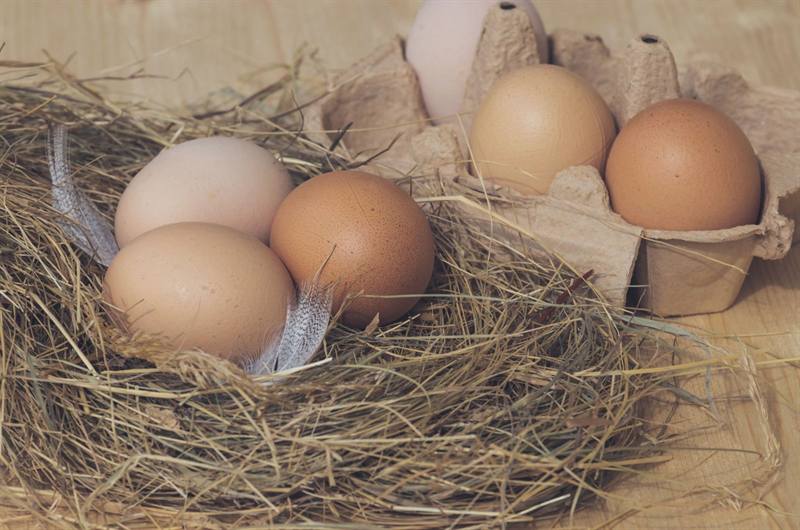
- A mixed tray: eggs from a village flock vary in size and shade. Thirty identical eggs point to a commercial flock.
- Bird size for its age: a traditional bird takes months to grow. A heavy, plump bird only weeks old is a broiler or an improved line.
- The price: kienyeji costs more to raise. "Kienyeji" eggs at layer prices deserve a second look.
- The seller's answer: a good seller can tell you whether the birds are traditional or an improved line, and where the chicks came from.
Myths that don't work
- "A deep orange yolk means kienyeji." Yolk colour comes mainly from what the hen eats. Greens, yellow maize and feed additives such as marigold or canthaxanthin darken it. A caged layer on coloured feed can beat a kienyeji hen fed white maize.
- "Brown or cream shells mean kienyeji." Most Kenyan layer eggs are brown, and KALRO's KC3 lays cream-white eggs. Shell colour depends on the breed and the hen, not on how she's kept.
- "Kienyeji shells are thicker." Kenyan studies disagree: one found kienyeji shells thinner than layer shells, another found them thicker.
- "Kienyeji eggs have far more protein." A Kenyan study found the same protein and fat in kienyeji and commercial eggs.
So what is the extra money for?
Mostly taste, texture and how the bird is raised. Kenyan research found:
- The same protein and fat, in both eggs and meat.
- Somewhat more iron and zinc in kienyeji eggs and meat, and more calcium in the eggs. That's from one study, so treat it as a bonus, not a promise.
- Meat with a firmer bite: a trained tasting panel rated indigenous chicken about right for flavour, juiciness and tenderness. The broiler was too soft and juicy and too pale. That firmer bite is why kienyeji is slow-cooked.
If you love the taste, kienyeji is worth it. If you only need protein, layer eggs and broilers give you the same for less.
Kienyeji from our farm
Our kienyeji birds are raised the traditional way in Kirindo, Siaya. We sell kienyeji eggs and layer eggs as two separate products, each priced on its own, so you always know which one you're buying.
Where this information comes from
Checked against these sources. Rules and schedules change, so confirm with the relevant office before you rely on them.
- Chepkemoi et al., Livestock Research for Rural Development 29(8), 2017: nutrients in indigenous vs commercial eggs and meat in Kenya
- Wambui, Njoroge and Wasike, LRRD 30(7), 2018: indigenous vs commercial eggs in Western Kenya (weight, shell)
- Gikunju et al., LRRD 30(10), 2018: egg weights of indigenous, exotic and crossbred chickens
- Mujyambere et al., Poultry Science, 2022: indigenous chicken performance in East Africa (Kenyan figures)
- The Star: KALRO's improved indigenous chicken breeds KC1, KC2 and KC3
- The Standard: chicken breeds in Kenya (Kenbro, Sasso, Kuroiler, Rainbow Rooster)
- Maia et al., South African Journal of Animal Science, 2022: feed pigments and yolk colour
- UF/IFAS Extension: what yolk colour really tells you
- ILRI: scaling improved indigenous chicken in Kenya (price premium)
Kienyeji and layer eggs, sold for what they are
Two separate products from our own hens in Kirindo, Siaya, each priced on its own. Order a tray on WhatsApp.